In today’s fast‑changing workplace, HR isn’t just about processing forms and filling vacancies—it’s about boosting productivity, driving engagement, and enabling people to do their best work. But when routine tasks, manual check‑ins, and disconnected systems dominate, talent gets bogged down and opportunity gets lost. Artificial Intelligence (AI) is now not just a tool but a partner in HR, automating mundane work, spotting signals of disengagement, and freeing HR teams to focus on human connection.
When deployed thoughtfully, AI can shift HR from admin‑heavy to insight‑driven, transforming workforce productivity and engagement into everyday realities.
How AI Reduces Routine HR Work
Day‑to‑day HR often involves a long list of repetitive tasks: approval chains, reminder emails, data entry, payroll checks, and follows‑ups. AI automates these processes by handling approval workflows, issuing reminders for missing timesheets, checking data consistency, and routing tasks to the correct people. This means HR teams spend less time chasing forms and giving status updates, and more time doing strategic work that moves the business forward.
At the same time, employees benefit because simple tasks like leave requests or payslip access become faster, smoother and more self‑service. The net effect is clearer processes, less frustration, and more time for high‑value HR initiatives that truly support workforce productivity.
Spotting Early Signs of Burnout or Disengagement
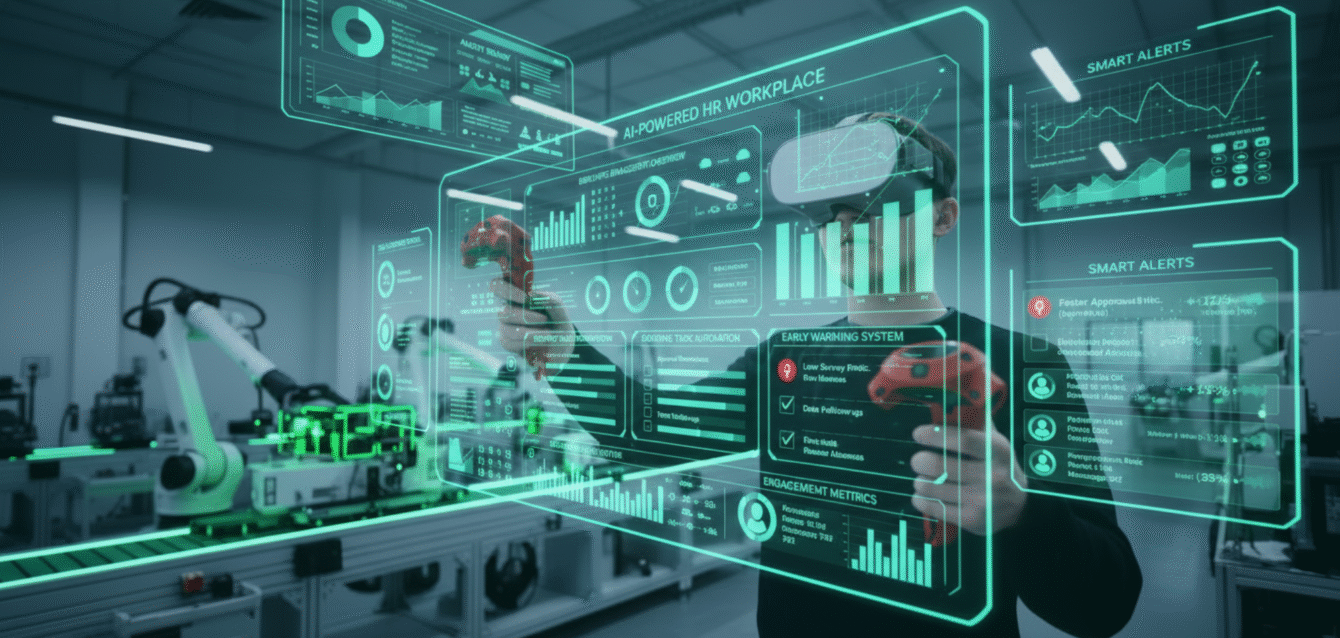
One of the hidden costs of low engagement or rising burnout is the lag between the first signs and leadership action. AI helps close that gap by analysing signals like increased absenteeism, late check‑ins, stagnant survey responses, declining recognition patterns or shifts in sentiment. By flagging risk‑profiles early, managers are nudged to act—whether that means a 1:1 conversation, a workload adjustment or wellbeing support.
This early intervention approach doesn’t just prevent attrition—it supports a culture of care and responsiveness. Employees who feel seen, heard and supported are more likely to stay engaged and productive. In that way, AI acts as a monitor and catalyst for proactive HR rather than a reactive fire‑fighter.
Automating Everyday Employee Tasks
Modern HR systems powered by AI empower employees to go self‑service for many of their routine needs—submitting leave, claiming expenses, retrieving payslips, viewing benefits, scheduling check‑ins, and accessing career‑path tools. This automation shrinks wait‑times, reduces back‑and‑forth emails, and elevates employee satisfaction by giving people control and transparency.
By handling the mundane, HR becomes a partner in productivity—not a bottleneck. Employees spend less time waiting and more time doing meaningful work. Engagement rises, because when the systems work for the employee instead of against them, the workplace experience improves.
Smart Alerts That Support Teams Without Spam
Managers and HR teams today get flooded with notifications, many of which turn into noise. AI changes that by issuing smart alerts—like a missing appraisal form near its due date, a team member whose recognition activity has dropped below threshold, or a policy‑reminder locked to the correct role and timing. These alerts are contextual, relevant and actionable—not spam.
The result is that teams receive the right nudges at the right time, enabling timely follow‑through and accountability. This subtle guidance keeps workflows moving, ensures compliance and supports engagement without turning alerts into background static.
Quick Productivity Wins in 30‑60 Days
When AI tools are introduced with clarity and alignment, HR and business teams often see tangible gains within 1‑2 months. These early wins might include faster approvals, fewer follow‑ups, cleaner data, faster onboarding, reduced search time for payslips, and higher employee satisfaction with HR responsiveness.
Typical measurable improvements include:
-
Reduced follow‑up emails for approvals and timesheets
-
Faster turnaround for leave/expense requests
-
Fewer manual data‑cleanup tasks in HR systems
-
Improved response rates in internal HR communications
These early wins build momentum and drive adoption, showing everyone that AI isn’t a future promise—it’s a present performance tool.
Measuring Engagement and Productivity Simply
The final piece is measurement. Without metrics, it’s hard to know whether AI support is delivering impact. Tracking simple markers like survey response rates, number of recognition notes, feedback submission frequency, completion of check‑ins, HR ticket resolution time and hours saved on approvals offers clarity. Regular dashboards showing these metrics give HR leadership and business managers a clear sense of return on investment.
With data in hand, teams can fine‑tune workflows, decide where to scale automation next, and align HR technology investments with business goals. When productivity and engagement rise together, the case for AI becomes both compelling and clear.
The Takeaway
AI‑powered HR is not about replacing the human touch—it’s about amplifying it. By automating routine tasks, surfacing hidden signals, enabling self‑service and delivering timely nudges, HR shifts from transactional to transformational. Engagement rises, productivity improves, and the workplace becomes not just more efficient but more human.